Monday, December 15, 2008

History Timeline -Chronology of Important Events

Ghana Flag Pictures, Images and Photos
EARLY HISTORY
ca. 10,000 B.C. Earliest recorded probable human habitation within modern Ghana at site on Oti River.
ca. 4000 B.C. Oldest date for pottery at Stone Age site near Accra.
ca. 100 B.C. Early Iron Age at Tema. FORMATIVE CENTURIES
ca. A.D. 1200 Guan begin their migrations down Volta Basin from Gonja toward Gulf of Guinea.
ca. 1298 Akan kingdom of Bono (Brong) founded. Other states had arisen or were beginning to rise about this time.
1471-82 First Europeans arrive. Portuguese build Elmina Castle.
1482 - Portuguese set up trading settlement.
1500-1807 Era of slave raids and wars and of intense state formation in Gold Coast.
1697-1745 Rise and consolidation of Asante Empire.
1874 - British proclaim coastal area a crown colony. NINETEENTH CENTURY
1817 - 1821: Two ambassadors were sent to Kumasi to discuss peace with King Osei Bonsu. This failed.
1823 - 1824: In Asante Denkyira war, Sir Charles Macarthy and his Fante allies supported the Denkyiras. Marcathy was killed.
1826: The Asantes were defeated in the Battle of Kantamanto near Dodowa.
1831: George Maclean signed treaty with the Asantes. 600 ounces of Gold kept for the Asantes. Two princes sent to Britain. Returned after 6 years in 1842.
1843-44 British government signs Bond of 1844 with Fante chiefs.
1863: Battle of Bobikuma. Britain defeated
1864: Britain lost another war.
1873-1877: Kofi Karikari invaded Southern and coastal areas. Major General Sir Garnet Woseley with British expedition forces defeated the Asantes. Treaty of Fomena in 1874. Asante forced to recognize the Independence of all states south of the Pra River.
1873-74 Last Asante invasion of coast. British capture Kumasi.
1874 Britain establishes Gold Coast Colony.
1878 Cocoa introduced to Ghana.
1888: Nana Agyeman Prempeh I ascended the throne of the Asante Kingdom.
1896 Anglo-Asante war leads to exile of asantehene and British protectorate over Asante. - British troops marched to Kumasi, led by Sir Francis Scott. The king was exiled first to the Elmina Castle, then to Sierra Leone and later to Seychels.
1897 Aboriginess right Protection society. TWENTIETH CENTURY -Pre Independence
1900: First Africans appointed to colony's Legislative Council. Arnold Hodgson went to ask for the golden stool. The Asantes were infuriated. Yaa Asantewaa, the queen mother of Edwiso (Ejisu) led attack on the British Fort in Kumasi.
1902: Northern Territories proclaimed a British protectorate.
1914-18: Gold Coast Regiment serves with distinction in East Africa.
1919: German Togo becomes a mandate under Gold Coast administration.
1924: Nana Agyemang Prempeh I returned . Died in 1931.
1925: Constitution of 1925 calls for six chiefs to be elected to Legislative Council. Guggisburg Constitution
1935: Prempeh II Asante Confideracy Council.
1939-45 Gold Coast African forces serve in Ethiopia and Burma.
1947 United Gold Coast Convention founded.
1948 Nii Kwabena Bone II--an Accra chief organised the boycott of Europen and Syrian, Lebanese goods.
28 Feb 1948: Ex-servicemen marched on Christianborg Castle to hand petition to the governor about their poor conditions. The order was given and 3 laid dead. UGCC was held responsible and its officers were detained. (The dead were sergeant Adjetey, Corporal Attipoe, and Private Odartey Lamptey). The six detained were Kwame Nkrumah, Obetsebi Lamptey, Ako Adjei, Ofori-Atta, Dr Danquah and Akuffo Addo. Mr Aiken Watson was appointed by the British Government to look into disturbances. He recommended a new constitution. Mr J Cousey headed this committee.
1949 Kwame Nkrumah breaks with United Gold Coast Convention and forms Convention People's Party. Internal trouble in UGCC. Nkrumah broke off to form his own Convention Peoples' Party (CPP), with the slogan of SELF GOVERNMENT NOW.
1951 New constitution leads to general elections. Convention People's Party wins two-thirds majority. First General election . CPP won 34 seats , UGCC --3. Kwame Nkrumah who was in prison for positive action, won the seat in central Accra, and was released to become the leader of Govt business, and Prime Minister on 21 March 1952.
1954 New constitution grants broad powers to Nkrumah's government. 104 elected representatives. CPP --72 seats, Northern People's Party (NPP) - 15, Independents - 11, and others - 6.The NLM (National Liberation Movement ) was formed by linguist Baffour Akoto. Leader was J B Danquah, and Dr K.A. Bussia - member. This group wanted a federal government.
1956 Plebiscite in British Togoland calls for union with Gold Coast. There was another election. CPP won 72 of the 104 seats. The NLM and its allies won the remaining seats and so became the parliamentary opposition. The former British Mandated Togoland also voted to join the Gold Coast--Ghana.
Convention People's Party wins 68 percent of seats in legislature and passes an independence motion, which British Parliament approves.
1957 British Colony of the Gold Coast becomes independent Ghana on March 6. TWENTIETH CENTURY -Post Independence
1958 Entrenched protection clauses of constitution repealed; regional assemblies abolished; Preventive Detention Act passed.
1960 Plebiscite creates a republic on July 1, with Nkrumah as president.
1964 Ghana declared a one-party state. Completion of Akosombo Dam.
1966: Feb 24 - While Nkrumah is in China, army stages widely popular coup. National Liberation Council(NLC), led by General Joseph Ankrah, comes to power. Russian and Chinese technicians expelled.
1969: General Ankrah is replaced by Brigadier Akwasi Afrifa in April, a new constitution is introduced and the ban on party politics is lifted the following month. August -- an election for a new National Assembly is held, the Progress Party (PP) wins and is led by Dr Kofi Busia, who is subsequently appointed Prime Minister. The PP government takes office in October.
1972 Lieutenant Colonel Ignatius Acheampong leads a military coup in January that brings National Redemption Council to power.
1975: The NRC is replaced by the Supreme Military Council (SMC) also led by Acheampong.
1978: A referendum is held in favour of union government. July 5 Acheampong forced to resign by fellow officers; General Frederick Akuffo takes over. TWENTIETH CENTURY -Rawlings Era
1979: The ban on party politics is lifted and 16 new parties are subsequently registered. May - A coup staged by junior officers of the armed forces, led by Flt-Lt Jerry Rawlings, fails on 15 May and he is subsequently imprisoned. June 4 - Junior officers stage Ghana's first violent coup. Armed Forces Revolutionary Council formed under Flight Lieutenant Jerry John Rawlings. July - Hilla Limann elected president in July.
1981: Rawlings stages second coup, December 31. Provisional National Defence Council established with Rawlings as chairman.
1983: First phase of Economic Recovery Program introduced with World Bank and International Monetary Fund support. Rawlings adopts conservative economic policies, abolishing subsidies and price controls, privatising many state enterprises and devaluing the currency.
1985 National Commission for Democracy, established to plan the democratization of Ghana's political system, officially inaugurated in January.
1988-89: Elections for new district assemblies begin in early December and continue through February 1989.
1990: Various organizations call for return to civilian government and multiparty politics, among them Movement for Freedom and Justice, founded in August.
1991: Provisional National Defence Council announces its acceptance, in May, of multipartyism in Ghana. June deadline set for creation of Consultative Assembly to discuss nation's new constitution.
1992: National referendum in April approves draft of new democratic constitution. Formation and registration of political parties becomes legal in May.
Jerry Rawlings elected president November 3 in national presidential election. Parliamentary elections of December 29 boycotted by major opposition parties, resulting in landslide victory for National Democratic Congress.
1993: Ghana's Fourth Republic inaugurated January 4 with the swearing in of Rawlings as president.
1994: One thousand people are killed and a further 150,000 are displaced in the Northern Region following ethnic clashes between the Konkomba and the Nanumba over land ownership. Late 1994- Ghana hosts peace talks for warring factions early 1995 of Liberian civil war.
1995 President Rawlings pays official visit to the United States March 8-9, first such visit by a Ghanaian head of state in more than thirty years. Government imposes curfew in Northern Region as renewed ethnic violence results in a further 100 deaths.
1996: Jerry Rawlings re-elected president for second and last term 21st CENTURY
2000: Presidential and Parliamentary elections took place on 7 December 2000. Opposition leader John Kufuor polled 48.4% of the vote, not enough to win the first round. John Atta Mills scored 44.8% with the five other parties scooping the remaining votes. In parallel parliamentary elections, the NPP achieved a majority taking 99 seats. NDC took 92, PNC 3, Convention People's Party 1, independents 4. The Presidential run-off between Kufuor and Mills took place on 28 December 2000. Kufuor won taking 57% of the votes cast.
2001: Kufuor is Sworn in as the new president in January 7. 26 February -Petrol prices rise by 60% following the government's decision to remove fuel subsidies. 2001 April - Ghana accepts debt relief under a scheme designed by the World Bank and the IMF. May 26 - 126 people are killed at the Accra Sports staduim in a soccer match June - Government scraps public holiday celebrating Rawling's military coup in an effort to wipe out the legacy of his rule. Thousands march in Accra to protest against statement by Rawlings that army may turn against government. June - Floods hit Accra causing 10 deaths and 100,000 to flee their homes.

Early European Contact and the Slave Trade

When the first Europeans arrived in the late fifteenth century, many inhabitants of the Gold Coast area were striving to consolidate their newly acquired territories and to settle into a secure and permanent environment. Several immigrant groups had yet to establish firm ascendancy over earlier occupants of their territories, and considerable displacement and secondary migrations were in progress. Ivor Wilks, a leading historian of Ghana, observed that Akan purchases of slaves from Portuguese traders operating from the Congo region augmented the labor needed for the state formation that was characteristic of this period. Unlike the Akan groups of the interior, the major coastal groups, such as the Fante, Ewe, and Ga, were for the most part settled in their homelands.
The Portuguese were the first to arrive. By 1471, under the patronage of Prince Henry the Navigator, they had reached the area that was to become known as the Gold Coast because Europeans knew the area as the source of gold that reached Muslim North Africa by way of trade routes across the Sahara. The initial Portuguese interest in trading for gold, ivory, and pepper so increased that in 1482 the Portuguese built their first permanent trading post on the western coast of present-day Ghana. This fortress, Elmina Castle, constructed to protect Portuguese trade from European competitors and hostile Africans, still stands.
With the opening of European plantations in the New World during the 1500s, which suddenly expanded the demand for slaves in the Americas, trade in slaves soon overshadowed gold as the principal export of the area. Indeed, the west coast of Africa became the principal source of slaves for the New World. The seemingly insatiable market and the substantial profits to be gained from the slave trade attracted adventurers from all over Europe. Much of the conflict that arose among European groups on the coast and among competing African kingdoms was the result of rivalry for control of this trade.
The Portuguese position on the Gold Coast remained secure for almost a century. During that time, Lisbon leased the right to establish trading posts to individuals or companies that sought to align themselves with the local chiefs and to exchange trade goods both for rights to conduct commerce and for slaves whom the chiefs could provide. During the seventeenth and eighteenth centuries, adventurers--first Dutch, and later English, Danish, and Swedish-- were granted licenses by their governments to trade overseas. On the Gold Coast, these European competitors built fortified trading stations and challenged the Portuguese. Sometimes they were also drawn into conflicts with local inhabitants as Europeans developed commercial alliances with local chiefs.
The principal early struggle was between the Dutch and the Portuguese. With the loss of Elmina in 1642 to the Dutch, the Portuguese left the Gold Coast permanently. The next 150 years saw kaleidoscopic change and uncertainty, marked by local conflicts and diplomatic maneuvers, during which various European powers struggled to establish or to maintain a position of dominance in the profitable trade of the Gold Coast littoral. Forts were built, abandoned, attacked, captured, sold, and exchanged, and many sites were selected at one time or another for fortified positions by contending European nations. Both the Dutch and the British formed companies to advance their African ventures and to protect their coastal establishments. The Dutch West India Company operated throughout most of the eighteenth century. The British African Company of Merchants, founded in 1750, was the successor to several earlier organizations of this type. These enterprises built and manned new installations as the companies pursued their trading activities and defended their respective jurisdictions with varying degrees of government backing. There were short-lived ventures by the Swedes and the Prussians. The Danes remained until 1850, when they withdrew from the Gold Coast. The British gained possession of all Dutch coastal forts by the last quarter of the nineteenth century, thus making them the dominant European power on the Gold Coast.
During the heyday of early European competition, slavery was an accepted social institution, and the slave trade overshadowed all other commercial activities on the West African coast. To be sure, slavery and slave trading were already firmly entrenched in many African societies before their contact with Europe. In most situations, men as well as women captured in local warfare became slaves. In general, however, slaves in African communities were often treated as junior members of the society with specific rights, and many were ultimately absorbed into their masters' families as full members. Given traditional methods of agricultural production in Africa, slavery in Africa was quite different from that which existed in the commercial plantation environments of the New World.
Another aspect of the impact of the trans-Atlantic slave trade on Africa concerns the role of African chiefs, Muslim traders, and merchant princes in the trade. Although there is no doubt that local rulers in West Africa engaged in slaving and received certain advantages from it, some scholars have challenged the premise that traditional chiefs in the vicinity of the Gold Coast engaged in wars of expansion for the sole purpose of acquiring slaves for the export market. In the case of Asante, for example, rulers of that kingdom are known to have supplied slaves to both Muslim traders in the north and to Europeans on the coast. Even so, the Asante waged war for purposes other than simply to secure slaves. They also fought to pacify territories that in theory were under Asante control, to exact tribute payments from subordinate kingdoms, and to secure access to trade routes--particularly those that connected the interior with the coast. It is important to mention, however, that the supply of slaves to the Gold Coast was entirely in African hands. Although powerful traditional chiefs, such as the rulers of Asante, Fante, and Ahanta, were known to have engaged in the slave trade, individual African merchants such as John Kabes, John Konny, Thomas Ewusi, and a broker known only as Noi commanded large bands of armed men, many of them slaves, and engaged in various forms of commercial activities with the Europeans on the coast.
The volume of the slave trade in West Africa grew rapidly from its inception around 1500 to its peak in the eighteenth century. Philip Curtin, a leading authority on the African slave trade, estimates that roughly 6.3 million slaves were shipped from West Africa to North America and South America, about 4.5 million of that number between 1701 and 1810. Perhaps 5,000 a year were shipped from the Gold Coast alone. The demographic impact of the slave trade on West Africa was probably substantially greater than the number actually enslaved because a significant number of Africans perished during slaving raids or while in captivity awaiting transshipment. All nations with an interest in West Africa participated in the slave trade. Relations between the Europeans and the local populations were often strained, and distrust led to frequent clashes. Disease caused high losses among the Europeans engaged in the slave trade, but the profits realized from the trade continued to attract them.
The growth of anti-slavery sentiment among Europeans made slow progress against vested African and European interests that were reaping profits from the traffic. Although individual clergymen condemned the slave trade as early as the seventeenth century, major Christian denominations did little to further early efforts at abolition. The Quakers, however, publicly declared themselves against slavery as early as 1727. Later in the century, the Danes stopped trading in slaves; Sweden and the Netherlands soon followed.
The importation of slaves into the United States was outlawed in 1807. In the same year, Britain used its naval power and its diplomatic muscle to outlaw trade in slaves by its citizens and to begin a campaign to stop the international trade in slaves. These efforts, however, were not successful until the 1860s because of the continued demand for plantation labor in the New World.
Because it took decades to end the trade in slaves, some historians doubt that the humanitarian impulse inspired the abolitionist movement. According to historian Walter Rodney, for example, Europe abolished the trans-Atlantic slave trade only because its profitability was undermined by the Industrial Revolution. Rodney argues that mass unemployment caused by the new industrial machinery, the need for new raw materials, and European competition for markets for finished goods are the real factors that brought an end to the trade in human cargo and the beginning of competition for colonial territories in Africa. Other scholars, however, disagree with Rodney, arguing that humanitarian concerns as well as social and economic factors were instrumental in ending the African slave trade.

Delightful DC Kwakye Quotes

Before Kwame Kwakye come DC all Oda water Milo (meaning before Kwame Kwakye became DC Oda water was dirty and looked like Milo - the cocoa drink)
If You Come To Ewisa, First House Dont Enter, Second House Dont Enter, Third House Enter Mine
My people too much of eyes open is eyes close
Since Osagyefo cannot division himself into twice, he has disappointed me to come and open this pipe. Now pipe open, water come, people drink, it can cook, it can wash, it can do nothing at all.
"If not Kwame Nkrumah, then me I am the who? All of you, you are the where?"
The time Dr. Kwame Nkrumah took me to abroad river subin was nkakranation. But now see saw whe, whe ne beuatiful ne, ne feefe whe ne progress ne, ne nkosoa.
D C Kwakye, do you have children?. Ans: No, because I'm a man, only women give birth.
Ques: DC Kwakye have you come across General Afrifa Ans; Yes, I just across Africa
"What I don't like most is promise and failure."
I stand in the foot of Osagefo Dr kwame Nkrumah
"I DC Kwakye Thank you for inviting me to open your new water project, now open your pipe, pipe open, ta, ta, ta, ta, ta !!!!!!!!!!!! "
"Hon Kwame Kwakye, what is your occupation?" Ans: "I occupy the whole of Akyem Oda district"
Q: "And what is your mission here?" Ans: "I'm a Roman Catholic"
"Because of my gynebeality, people are working myself mathematics". Meaning in twi-- enam me gyena bea nti nu nkrofu bu me hu akonta.
"From Akim-Oda to Kraboa coal tar Meaa me botom"
"Today the Ghana flag will flew"
"You Akim Oda students you say you are on stroke"
"Hon Kwame Kwakye, what is your motto?" "I don't have a motor, I have a mercedes benz car"
D.C. Kwakye in Court.
Welcome D.C. Kwakye Ans. Welcome D.C. Kwame Kwakyes.
Ques. Are you going to speak English or Vernacular ? Ans. Am to speak English becos am Englishman. Do you see me wearing my coat, in my trouser, my shoe and in my tie? ( Meaning he was dressed like an Englishman ) As the car burn the corf na etua mu.......
The whole of Akyem Oda am burglar...( meaning he is popular )
A meeting was called and DC Kwame Kwakye could not get there on time. So doors were shut and the meeting began. During the course of the meeting there was a Knock at the door. Visitor: KNOCK, KNOCK... Chairperson: Who is that? VISITOR: THE LATE DC KWAME KWAKYE. Drop us email webmaster if u have some more

Pre-Colonial Period--Ghana

By the end of the 16th Century, most ethnic groups constituting the modern Ghanaian population had settled in their present locations. Archaeological remains found in the coastal zone indicate that the area has been inhabited since the early Bronze Age (ca. 4000 B.C.), but these societies, based on fishing in the extensive lagoons and rivers, left few traces. Archaeological work also suggests that central Ghana north of the forest zone was inhabited as early as 3,000 to 4,000 years ago. Oral history and other sources suggest that the ancestors of some of Ghana's residents entered this area at least as early as the tenth century A.D. and that migration from the north and east continued thereafter. These migrations resulted in part from the formation and disintegration of a series of large states in the western Sudan (the region north of modern Ghana drained by the Niger River). Prominent among these Sudanic states was the Soninke Kingdom of Ancient Ghana. Strictly speaking, Ghana was the title of the King, but the Arabs, who left records of the Kingdom, applied the term to the King, the capital, and the state. The 9th Century Arab writer, Al Yaqubi, described ancient Ghana as one of the three most organised states in the region (the others being Gao and Kanem in the central Sudan). Its rulers were renowned for their wealth in gold, the opulence of their courts, and their warrior-hunting skills. They were also masters of the trade in gold, which drew North African merchants to the western Sudan. The military achievements of these and later western Sudanic rulers and their control over the region's gold mines constituted the nexus of their historical relations with merchants and rulers of North Africa and the Mediterranean. Ghana succumbed to attacks by its neighbours in the eleventh century, but its name and reputation endured. In 1957 when the leaders of the former British colony of the Gold Coast sought an appropriate name for their newly independent state, the first black African nation to gain its independence from colonial rule they named their new country after ancient Ghana. The choice was more than merely symbolic because modern Ghana, like its namesake, was equally famed for its wealth and trade in gold. Although none of the states of the western Sudan controlled territories in the area that is modern Ghana, several small Kingdoms that later developed in the north of the country were ruled by nobles believed to have emigrated from that region. The trans-Saharan trade that contributed to the expansion of Kingdoms in the western Sudan also led to the development of contacts with regions in northern modern Ghana and in the forest to the south. By 13th Century, for example, the town of Jenn頩n the empire of Mali had established commercial connections with the ethnic groups in the savannah woodland areas of the northern two-thirds of the Volta Basin in modern Ghana. Jenn頍 was also the headquarters of the Dyula, Muslim traders who dealt with the ancestors of the Akan-speaking peoples who occupy most of the southern half of the country. The growth of trade stimulated the development of early Akan states located on the trade route to the goldfields in the forest zone of the south. The forest itself was thinly populated, but Akan speaking peoples began to move into it toward the end of the 15th Century with the arrival of crops from Southeast Asia and the New World that could be adapted to forest conditions. These new crops included sorghum, bananas, and cassava. By the beginning of the 16th Century, European sources noted the existence of the gold rich states of Akan and Twifu in the Ofin River Valley. Also in the same period, some of the Mande who had stimulated the development of states in what is now northern Nigeria (the Hausa states and those of the Lake Chad area), moved south-westward and imposed themselves on many of the indigenous peoples of the northern half of modern Ghana and of Burkina Faso (Burkina, formerly Upper Volta), founding the states of Dagomba and Mamprusi. The Mande also influenced the rise of the Gonja state. It seems clear from oral traditions as well as from archaeological evidence that the Mole-Dagbane states of Mamprusi, Dagomba, and Gonja, as well as the Mossi states of Yatenga and Wagadugu, were among the earliest Kingdoms to emerge in modern Ghana, being well established by the close of the 16th Century. The Mossi and Gonja rulers came to speak the languages of the people they dominated. In general, however, members of the ruling class retained their traditions, and even today some of them can recite accounts of their northern origins. Although the rulers themselves were not usually Muslims, they either brought with them or welcomed Muslims as scribes and medicine men, and Muslims also played a significant role in the trade that linked southern with northern Ghana. As a result of their presence, Islam substantially influenced the north. Muslim influence, spread by the activities of merchants and clerics, has been recorded even among the Asante to the south. Although most Ghanaians retained their traditional beliefs, the Muslims brought with them certain skills, including writing, and introduced certain beliefs and practices that became part of the culture of the peoples among whom they settled
In the broad belt of rugged country between the northern boundaries of the Muslim-influenced states of Gonja, Mamprusi, and Dagomba and the southernmost outposts of the Mossi Kingdoms, lived a number of peoples who were not incorporated into these entities. Among these peoples were the Sisala, Kasena, Kusase, and Talensi, agriculturalists closely related to the Mossi. Rather than establishing centralised states themselves, they lived in so-called segmented societies, bound together by kinship ties and ruled by the heads of their clans. Trade between the Akan states to the south and the Mossi Kingdoms to the north flowed through their homelands, subjecting them to Islamic influence and to the depredations of these more powerful neighbours. Of the components that would later make up Ghana, the state of Asante was to have the most cohesive history and would exercise the greatest influence. The Asante are members of the Twi-speaking branch of the Akan people. The groups that came to constitute the core of the Asante confederacy moved north to settle in the vicinity of Lake Bosumtwe. Before the mid-17th Century, the Asante began an expansion under a series of militant leaders that led to the domination of surrounding peoples and to the formation of the most powerful of the states of the central forest zone. Under Chief Oti Akenten a series of successful military operations against neighbouring Akan states brought a larger surrounding territory into alliance with Asante. At the end of the 17th Century, Osei Tutu became Asantehene (King of Asante). Under Osei Tutu's rule, the confederacy of Asante states was transformed into an empire with its capital at Kumasi. Political and military consolidation ensued, resulting in firmly established centralised authority. Osei Tutu was strongly influenced by the high priest, Anokye, who, tradition asserts, caused a stool of gold to descend from the sky to seal the union of Asante states. Stools already functioned as traditional symbols of chieftainship, but the Golden Stool of Asante represented the united spirit of all the allied states and established a dual allegiance that superimposed the confederacy over the individual component states. The Golden Stool remains a respected national symbol of the traditional past and figures extensively in Asante ritual. Osei Tutu permitted newly conquered territories that joined the confederation to retain their own customs and Chiefs, who were given seats on the Asante state council. Osei Tutu's gesture made the process relatively easy and non-disruptive, because most of the earlier conquests had subjugated other Akan peoples. Within the Asante portions of the confederacy, each minor state continued to exercise internal self-rule, and its Chief jealously guarded the state's prerogatives against encroachment by the central authority. A strong unity developed, however, as the various communities subordinated their individual interests to central authority in matters of national concern. By the mid-18th Century, Asante was a highly organised state. The wars of expansion that brought the northern states of Mamprusi, Dagomba, and Gonja under Asante influence were won during the reign of Asantehene Opoku Ware I successor to Osei Tutu. By the 1820s, successive rulers had extended Asante boundaries southward. Although the northern expansions linked Asante with trade networks across the desert and in Hausaland to the east, movements into the south brought the Asante into contact, sometimes antagonistic, with the coastal Fante, Ga-Adangbe, and Ewe people, as well as with the various European merchants whose fortresses dotted the Gold Coast

Empire of Ancient Ghana

Ghana Flag Pictures, Images and Photos
Ancient Ghana derived power and wealth from gold and the introduction of the camel during the Trans-Saharan trade increased the quantity of goods that were transported. Majority of the knowledge of Ghana comes from the Arab writers. Al-Hamdani, for example, describes Ghana as having the richest gold mines on earth. These mines were situated at Bambuk, on the upper Senegal river. The Soninke people also sold slaves, salt and copper in exchange for textiles, beads and finished goods. They built their capital city, Kumbi Saleh, right on the edge of the Sahara and the city quickly became the most dynamic and important southern terminus of the Saharan trade routes. Kumbi Saleh became the focus of all trade, with a systematic form of taxation. Later on Audaghust became another commercial centre.The wealth of ancient Ghana is mythically explained in the tale of Bida, the black snake. This snake demanded an annual sacrifice in return for guaranteeing prosperity in the Kingdom, therefore each year a virgin was offered up for sacrifice, until one year, the fianc頍 (Mamadou Sarolle) of the intended victim rescued her. Feeling cheated of his sacrifice, Bida took his revenge on the region, a terrible drought took a hold of Ghana and gold mining began to decline. There is evidence found by archaeologists that confirms elements of the story, showing that until the 12th Century, sheep, cows and even goats were abundant in the region.The route taken by traders of the Maghreb to Ghana started in North Africa in Tahert, coming down through Sjilmasa in Southern Morocco. From there the trail went south and inland, running parallel with the coast, then round to the south-east through Awdaghust and ending up in Kumbi Saleh - the royal town of Ancient Ghana. Inevitably the traders brought Islam with them. The Islamic community at Kumbi Saleh remained a separate community quite a distance away from the King's palace. It had its own mosques and schools, but the King retained traditional beliefs. He drew on the bookkeeping and literary skills of Muslim scholars to help run the administration of the territory. The state of Takrur to the west had already adopted Islam as its official religion and established closer trading ties with North Africa.There were numerous reasons for the decline of Ghana. The King lost his trading monopoly, at the same time drought began and had a long-term effect on the land and its ability to sustain cattle and cultivation. Within the Arab tradition, there is the knowledge that the Almoravid Muslims came from North Africa and invaded Ghana. Other interpretations are that the Almoravid influence was gradual and did not involve any form of military takeover.In the 11th and 12th Century, new gold fields began to be mined at Bure (modern Guinea) out of commercial Ghana and new trade routes were opening up further east. Ghana then became the target of attacks by the Sosso ruler, Sumanguru. From this conflict in 1235 came the Malinke people under a new dynamic ruler, Sundiata Keita and soon became eclipsed by the Mali Empire of Sundiata.

http://www.ghanaweb.com/GhanaHomePage/history/ancient_ghana.php

Wednesday, December 10, 2008

The African-American Migration Experience

In Motion: The African-American Migration Experience presents a new interpretation of African-American history, one that focuses on the self-motivated activities of peoples of African descent to remake themselves and their worlds. Of the thirteen defining migrations that formed and transformed African America, only the transatlantic slave trade and the domestic slave trades were coerced, the eleven others were voluntary movements of resourceful and creative men and women, risk-takers in an exploitative and hostile environment. Their survival skills, efficient networks, and dynamic culture enabled them to thrive and spread, and to be at the very core of the settlement and development of the Americas. Their hopeful journeys changed not only their world and the fabric of the African Diaspora but also the Western Hemisphere.
These journeys did not originate in the east with the1619 arrival of Africans in Jamestown, Virginia, as is commonly believed, but almost a century earlier, further south. Indeed, African-American history starts in the 1500s with the first Africans coming from Mexico and the Caribbean to the Spanish territories of Florida, Texas, and other parts of the South. And as early as 1526, Africans rebelled and ran away in South Carolina.
These precursors were followed by successive generations of runaways who did not confine themselves to running North and to Canada on the Underground Railroad as traditional history teaches us. With pragmatism and efficiency, they also moved south to Mexico, or took their canoes to the Bahamas. They left the plantations and settled, secretly, in the urban centers of the South or found refuge in the swamps and among Native populations.

The new interpretation of African-American history that we present here also puts the Caribbean, Haitian, and contemporary African immigrations into the unfolding of the African-American migration experience. Peoples of the African Diaspora have contributed immensely to the fabric of African America and the nation. They too, with their specificities, are part of the African-American experience. Whether they came from Saint Domingue in 1791 and settled in Louisiana, left the Bahamas in the nineteenth century to develop Miami and Key West, Florida, or recently moved from Nigeria to Texas.

Check out the Shomberg site:

http://www.nypl.org/research/sc/shop/


http://www.inmotionaame.org/home.cfm

Remembering Adam Clayton Powell Jr.

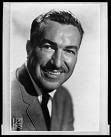
Adam Clayton Powell Jr. Pictures, Images and Photos

It is my destinct honor to post this great lion for Civil Rights: Mr. Powell would have turned 100 yrs old on Saturday November 29. He was a voice that roar in the political world. I feel we should never forget the sacrifices this great man and so many of our warriors that layed the work. “He was the blueprint for what all black elected officials should be: he was bold and passionate.”
Adam Clayton Powell Jr. was best known in his role as chairman of the House Committee on Education and Labor. He was a leading figure in passage of the backbone of the much of the social legislation of the Kennedy and Johnson presidencies.
He helped steer the passage of the minimum wage bill, the Manpower Development and Training Act, the antipoverty bill, and bills providing federal money for student loans and for public libraries.

Of course, the congressman had his troubles, and they made headlines throughout the country. He was criticized with increasing frequency for mismanagement of his committee’s finances and traveling at public expense. He spent a good deal of time outside the district and faced a series of troubles for his refusal to pay a judgment that resulted from a slander suit.
In 1970, he was defeated in the Democratic primary by an assemblyman named Charles B. Rangel, who has represented northern Manhattan in Congress ever since.

http://cityroom.blogs.nytimes.com/2008/11/28/remembering-adam-clayton-powell-jr/